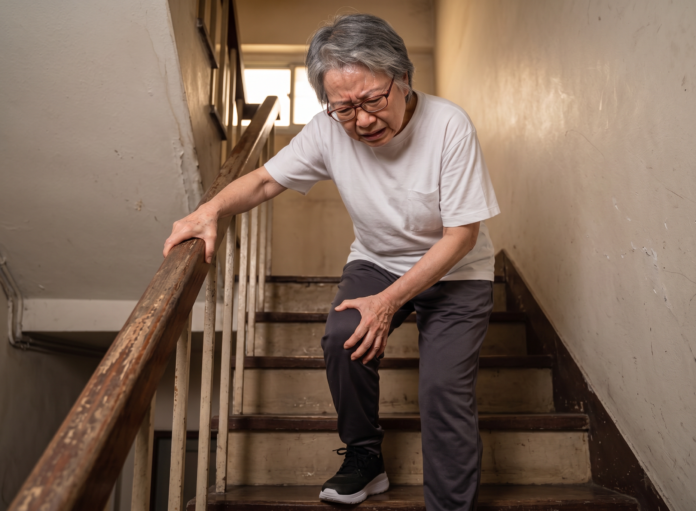
腸-肌軸(gut-muscle axis)是指腸道菌叢與骨骼肌之間的雙向溝通與調節機制。腸道菌發酵膳食纖維所產生的短鏈脂肪酸等代謝物,會影響肌肉的蛋白質代謝、發炎反應、胰島素敏感性與粒線體功能;而適度運動則能增加腸道中產生短鏈脂肪酸的菌種。
一篇系統性回顧統整8項糞便菌移植研究,觀察到菌相移植的受體小鼠,出現了與捐贈者相似的肌肉表現;台灣的人體研究也發現,肌肉量偏低的長者,腸道菌多樣性與糞便丁酸濃度都較低。
這些發現受到重視,是因為「肌少症」(Sarcopenia)是常見的老化現象。全球統合分析顯示,60歲以上族群的肌少症盛行率約為10%至27%,且與非肌少症長者相比,肌少症長者的腸道菌α多樣性也較低。老化本身也會改變腸道菌相,例如產生短鏈脂肪酸的菌減少、條件致病菌增加等。
此外,研究也指出肌少症與大腦的關聯:握力最低的五分之一族群,其失智症發生風險比握力最高的族群增加了72%。因此,肌肉、腸道與大腦之間的關聯,成為近年抗老研究的焦點。
一、腸-肌軸是什麼?腸道菌如何參與肌肉的維持與代謝?
「腸-肌軸(Gut-Muscle Axis)」是腸道菌群與骨骼肌之間的雙向溝通路徑,主要透過以下四條途徑影響:
- 短鏈脂肪酸(SCFAs):腸道好菌發酵膳食纖維後,會產生乙酸、丙酸、丁酸等短鏈脂肪酸。它們能促進粒線體功能、提升胰島素敏感度並幫助肌肉蛋白質合成,也能穿越血腦屏障,抑制神經發炎並調節中樞神經健康。
- 神經傳導物質的製造:周邊血清素至少有90%由腸道的腸嗜鉻細胞製造,雖無法穿越血腦屏障,但能透過腸腦軸與大腦的血清素系統互相影響,調節身體的活動意願與肌肉表現。
- 腸道屏障與發炎調控:健康的腸道黏膜能阻擋細菌毒素進入血液。長者的菌相改變,進而造成腸道通透性增加、免疫系統活化,形成慢性發炎。發炎因子會同時破壞大腦神經元並加速肌肉蛋白分解,可能與失智與肌少症的並存有關。
- 胺基酸與營養代謝:腸道菌參與蛋白質、能量、脂質與葡萄糖代謝,影響肌肉的營養供應。
2022年發表於《Clinical Nutrition》的研究也指出肌肉狀態與腸道微生物及其代謝物存在聯繫:肌肉量偏低的長者,其腸道菌相多樣性與糞便丁酸濃度,均低於肌肉量正常者,且糞便中丁酸濃度也與骨骼肌質量指數呈正相關。
二、隨著年齡增長,腸道菌相會如何改變?
隨著年齡增長,人體的腸道菌相(腸道微生物群)會出現明顯的生理與結構性變化,常見的變化包括:
1. 菌群多樣性降低:
- 多樣性較低:肌少症長者的腸道菌α多樣性(指單一個人或單一腸道樣本內,微生物菌種的「豐富度」與「分布均勻度」),低於非肌少症長者。
- 個體差異擴大:自中年後期起,個人的菌相組成愈來愈獨特。
2. 有益菌顯著減少
- 雙歧桿菌(Bifidobacterium)與乳酸桿菌(Lactobacillus)減少:這些常見的健康好菌在老年人或熟齡族群中數量會明顯降低。
- 短鏈脂肪酸(SCFAs)產生菌減少:Dorea、Blautia 與 Coprococcus 都是人類腸道中的核心共生厭氧菌屬,通常代表良好的腸道屏障與抗發炎能力,其豐富度大多會隨著年齡增長而逐漸減少。
3. 有害菌與條件致病菌增加
- 大腸桿菌(E. coli)、艱難梭菌(Clostridioides difficile,又稱困難梭菌)等壞菌增生:這類細菌在健康年輕人的腸道中通常受到好菌抑制,但隨年齡增長或使用抗生素後容易大量繁殖,壓迫好菌生長,並增加脂多醣(又稱內毒素, LPS)的合成。
在國際老化生物學的研究架構中,研究者已將菌相失衡列為「老化標誌」之一,代表它不僅是老化的結果,也是推動老化的機制之一。
什麼是老化標誌?菌相失衡為什麼被列入?
老化的標誌 / 衰老特徵(Hallmarks of Aging)是老化生物學(Geroscience)用來歸納老化機制的科學架構。最初於2013年由López-Otín等學者在頂尖學術期刊《Cell》發表,被列為老化標誌須符合三個條件:
- 會隨正常老化出現
- 以實驗加重時,會加速老化
- 外部介入時,能延緩老化
2025年已擴充至以下14大老化標誌:
| 類別 | 老化標誌 | 主要內容 |
| 主要標誌 | 基因組不穩定性 | DNA損傷與突變隨時間累積 |
| 端粒縮短 | 染色體末端隨細胞分裂縮短,可能導致細胞功能障礙或進入衰老狀態 | |
| 表觀遺傳變化 | 不涉及DNA序列改變的基因表現調控異常 | |
| 蛋白質穩態喪失 | 維持蛋白質正確摺疊、防止受損蛋白質聚集的機制失效 | |
| 巨自噬失能(Disabled Macroautophagy) | 細胞自我清除受損胞器的能力下降,導致廢物堆積 | |
| 拮抗標誌 | 營養感知調控失衡 | mTOR、胰島素/IGF-1等感知營養、調節代謝與生長的路徑異常 |
| 粒線體功能障礙 | 能量產生效率下降,活性氧自由基增加 | |
| 細胞衰老 | 細胞停止分裂病分泌促發炎因子(SASP),隨年齡累積 | |
| 整合標誌 | 幹細胞枯竭 | 幹細胞數量與功能下降,組織再生與修復能力減弱 |
| 細胞間通訊異常 | 內分泌、神經與免疫等細胞間訊號傳遞失調 | |
| 慢性發炎 | 隨年齡出現的持續性低度發炎,又稱發炎性老化 | |
| 菌相失衡 | 腸道微生物群落的組成與功能異常 | |
| 細胞外基質變化 | 細胞周圍支撐結構的組成與彈性改變 | |
| 架構中心 | 心理社會孤立 | 社會連結減弱與相關心理壓力,可能透過長期壓力反應損害健康 |
菌相變化和健康老化有什麼關聯?
研究指出健康老化的長者,擬桿菌屬(Bacteroides)等核心菌屬的比例會下降;若長者持續維持高比例的擬桿菌屬,或菌相獨特性偏低,4年追蹤期間的存活率較低。
老化帶來的菌相變化,會透過腸-腦-肌軸影響身體:
- 肌肉與衰弱症:引發發炎與合成代謝阻抗,影響老年常見的肌少症與身體衰弱進程。
- 影響認知功能:好菌減少、具促炎特性的細菌增加時,可能引發全身性與神經發炎,與類澱粉蛋白累積及認知衰退有關。
調整生活型態,可以改變老化菌相嗎?
腸道菌相並非固定不變。一項跨國長者研究發現,長者遵循地中海飲食一年,其菌相確實出現改變,且衰弱與發炎指標同時下降,認知表現也有所提升。
此外,研究也發現,運動能增加長者腸道中產生短鏈脂肪酸的菌群。
三、肌力變差,失智風險也跟著升高?看懂肌肉與大腦的關聯
具代表性的觀察性研究及世代統合分析顯示,肌力較差或患有肌少症的人,日後發生失智症的風險較高。研究認為,肌肉分泌的肌肉激素、慢性發炎與代謝變化,可能為肌肉與大腦之間的連結。
肌肉如何與大腦連結?
肌肉不僅是依照大腦指令負責動作,也會分泌訊號分子與大腦溝通:
- 肌肉激素(Myokines):運動時,肌肉會合成並釋放多種特殊的胜肽與細胞因子(如鳶尾素Irisin),進入血液循環並穿過血腦屏障,能保護腦細胞、促進神經元新生、增進突觸可塑性,甚至改善記憶力與抗發炎。
- 代謝產物(如乳酸):運動產生的乳酸可作為神經元的能量來源,促進腦部血管新生與神經可塑性。
- 本體感覺(Proprioception):肌肉與關節中的感覺受器會隨時將身體的位置、張力和運動狀態回傳給大腦,幫助大腦隨時修正與調整下一次的動作。
反之,若長期活動量不足,會讓肌肉激素的分泌失衡,透過以下途徑影響大腦健康:
- 神經滋養因子減少:鳶尾素與組織蛋白酶B進入大腦後,可促進腦中神經滋養因子(BDNF)的生成;分泌不足時,這層保護也隨之減弱。
- 慢性發炎加劇:全身性發炎加重,而神經發炎可能參與認知退化。
- 胰島素代謝受影響:活動量不足會降低肌肉利用葡萄糖的能力,並可能影響胰島素穿越血腦屏障,造成中樞胰島素阻抗。
- 粒線體功能下降:功能受損時造成過量的活性氧物質,引發氧化壓力,進一步傷害粒線體本身,並形成突變與損傷的惡性循環。
- 蛋白質代謝失衡:蛋白質不足時,身體會被迫分解骨骼肌來維持基本生理機能,除了導致肌力減退外,也會影響腦部代謝與認知功能。
肌少症新共識AWGS 2025:為什麼肌肉影響全身健康?
亞洲肌少症工作小組(Asian Working Group for Sarcopenia, AWGS)在 2025年於《Nature Aging》發表的最新共識,將重點從「肌少症疾病診斷」轉向全生命週期的「肌肉健康促進(Muscle Health Promotion)」。
新共識將骨骼肌定義為維持健康與長壽的核心器官,強調肌肉會影響身體四大關鍵系統:
- 大腦:維持神經可塑性與認知功能,降低失智與認知衰退風險。
- 骨骼:透過機械受力與內分泌訊號促進骨質密度,預防骨質疏鬆與骨折。
- 脂肪組織:調控全身能量消耗與血糖穩定,減少內臟脂肪堆積與胰島素阻抗。
- 免疫系統:介白素等肌肉激素,能調節全身發炎反應,增強免疫力並降低感染與慢性病風險。
因此,充足的肌肉量是健康老化關鍵,不僅能保護骨骼、調節免疫系統與心血管機能,也對大腦的認知健康有所影響。年長者的肌肉若逐漸流失,會提高整體慢性病與身體衰弱的機率。
四、抗老益生菌PS23:改善肌力流失與提升大腦保護因子
「抗老益生菌」(Gerobiotic, 或稱健齡益生菌)是由陽明交通大學蔡英傑教授於2021年在國際期刊(BMFH)首度提出並定義。是指一類專門作用於人體老化基礎機制、有助於延緩生理老化並延長健康壽命(Healthspan)的特定益生菌菌株、後生元(Postbiotics)與副生元(Para-probiotics)。
副乾酪乳桿菌PS23(Lactobacillus paracasei PS23)為抗老代表性菌株,從健康人體糞便分離。PS23並非單純的「神經抗老」,而是透過腸腦肌軸,維持高齡族群的生物韌性(Biological Resilience),同步支持認知功能、神經與肌肉健康。
臨床實證:含PS23配方補充品,可幫助改善高齡長者肌少症
義大利一項為期2個月的隨機雙盲試驗,以平均80歲的肌少症長者為對象,比較含副乾酪乳桿菌PS23、白胺酸與omega-3脂肪酸的複方配方和安慰劑的差異,研究結果如下:
- 握力進步:PS23配方組約提升4.1公斤
- 身體功能與平衡:PS23配方組的簡易身體功能量表(SPPB)進步約2.7分,Tinetti平衡步態量表進步約2分
- 發炎指標:PS23配方組的C反應蛋白明顯下降0.69 mg/dL
- 必需支鏈胺基酸(BCAA)顯著增加:PS23配方組的 Valine(纈胺酸)、Leucine(白胺酸)、Isoleucine(異白胺酸)及Total amino acids(總胺基酸)等用於支持運動恢復、蛋白質合成與預防肌肉流失的胺基酸增加。
前臨床實驗:PS23降低發炎反應,改善認知功能
BDNF(腦源性神經滋養因子)是支持神經元存活與神經可塑性的重要蛋白質,也稱為大腦保護因子,其濃度會隨老化下降。
老化加速小鼠 補充PS23連續12週後:
- 記憶表現:水迷宮測驗中停留在目標區域的時間較長。
- BDNF上升:血清中的BDNF為對照組的1.1倍。
- 發炎反應:血清中的促發炎因子較低、抗發炎因子較高。
- 抗氧化能力:血清與海馬迴的抗氧化酵素活性升高。
D-半乳糖誘導老化小鼠 補充活菌與熱處理PS23後:
- 記憶表現:記憶測驗表現恢復到接近未老化小鼠。
- 神經傳導物質:海馬迴的血清素濃度較高。
- 抗發炎與神經可塑性:與抗發炎及神經可塑性相關的基因表現上升。
- 抗氧化能力:補充活菌PS23能提升海馬迴中抗氧化酵素活性。
科學研究與醫學觀點指出,老化是自然的生理過程,但並不表示必然衰退。透過後天的生活型態調整與飲食介入,大腦與身體在年長時仍可能維持高度機能。
健康老的核心策略在於利用規律運動與精準營養,透過阻力訓練與充足蛋白質攝取,同步優化腸道菌相,透過腸-腦-肌軸途徑,形成一個抗衰老的正向循環。
參考資料
- Fang, J., Yan, W., Sun, X., & Chen, J. (2025). The role of exercise-induced short-chain fatty acids in the gut–muscle axis: Implications for sarcopenia prevention and therapy. Frontiers in Microbiology, 16, 1665551. https://doi.org/10.3389/fmicb.2025.1665551
- Liu, C., Cheung, W.-H., Li, J., Chow, S. K.-H., Yu, J., Wong, S. H., Ip, M., Sung, J. J. Y., & Wong, R. M. Y. (2021). Understanding the gut microbiota and sarcopenia: A systematic review. Journal of Cachexia, Sarcopenia and Muscle, 12(6), 1393–1407. https://doi.org/10.1002/jcsm.12784
- Han, D.-S., Wu, W.-K., Liu, P.-Y., Yang, Y.-T., Hsu, H.-C., Kuo, C.-H., Wu, M.-S., & Wang, T.-G. (2022). Differences in the gut microbiome and reduced fecal butyrate in elders with low skeletal muscle mass. Clinical Nutrition, 41(7), 1491–1500. https://doi.org/10.1016/j.clnu.2022.05.008
- Petermann-Rocha, F., Balntzi, V., Gray, S. R., Lara, J., Ho, F. K., Pell, J. P., & Celis-Morales, C. (2022). Global prevalence of sarcopenia and severe sarcopenia: A systematic review and meta-analysis. Journal of Cachexia, Sarcopenia and Muscle, 13(1), 86–99. https://doi.org/10.1002/jcsm.12783
- Ko, C.-H., Chuang, H.-Y., Wu, S.-J., Yu, S.-C., Chang, Y.-F., Chang, C.-S., & Wu, C.-H. (2022). Changes of sarcopenia case finding by different Asian Working Group for Sarcopenia in community indwelling middle-aged and old people. Frontiers in Medicine, 9, 1041186. https://doi.org/10.3389/fmed.2022.1041186
- Chang, C.-F., Yeh, Y.-L., Chang, H.-Y., Tsai, S.-H., & Wang, J.-Y. (2021). Prevalence and risk factors of sarcopenia among older adults aged ≥65 years admitted to daycare centers of Taiwan: Using AWGS 2019 guidelines. International Journal of Environmental Research and Public Health, 18(16), 8299. https://doi.org/10.3390/ijerph18168299
- Chen, L.-K., Hsiao, F.-Y., Akishita, M., Assantachai, P., Lee, W.-J., Lim, W. S., Muangpaisan, W., Kim, M., Merchant, R. A., Peng, L.-N., Tan, M. P., Won, C. W., Yamada, M., Woo, J., & Arai, H. (2025). A focus shift from sarcopenia to muscle health in the Asian Working Group for Sarcopenia 2025 Consensus Update. Nature Aging, 5(11), 2164–2175. https://doi.org/10.1038/s43587-025-01004-y
- Lim, M. Y., & Nam, Y.-D. (2023). Gut microbiome in healthy aging versus those associated with frailty. Gut Microbes, 15(2), 2278225. https://doi.org/10.1080/19490976.2023.2278225
- Ren, Y., He, X., Wang, L., & Chen, N. (2025). Comparison of the gut microbiota in older people with and without sarcopenia: A systematic review and meta-analysis. Frontiers in Cellular and Infection Microbiology, 15, 1480293. https://doi.org/10.3389/fcimb.2025.1480293
- Esteban-Cornejo, I., Ho, F. K., Petermann-Rocha, F., Lyall, D. M., Martinez-Gomez, D., Cabanas-Sánchez, V., Ortega, F. B., Hillman, C. H., Gill, J. M. R., Quinn, T. J., Sattar, N., Pell, J. P., Gray, S. R., & Celis-Morales, C. (2022). Handgrip strength and all-cause dementia incidence and mortality: Findings from the UK Biobank prospective cohort study. Journal of Cachexia, Sarcopenia and Muscle, 13(3), 1514–1525. https://doi.org/10.1002/jcsm.12857
- Liu, X., Xu, M., Wang, H., & Zhu, L. (2025). Role and mechanism of short-chain fatty acids in skeletal muscle homeostasis and exercise performance. Nutrients, 17(9), 1463. https://doi.org/10.3390/nu17091463
- Taslim, N. A., Sibarani, J. N., Alfaray, R. I., Mayulu, N., Mustika, A., Kumalawati, D. A., Permatasari, H. K., Tjandrawinata, R. R., & Nurkolis, F. (2026). The gut–brain–muscle axis: Microbial regulation of neuromuscular aging and cognitive frailty. Microorganisms, 14(6), 1366. https://doi.org/10.3390/microorganisms14061366
- Li, G. L., Dong, S. J., Liu, C. H., Yang, J., Rensen, P. C. N., & Wang, Y. A. (2025). Serotonin signaling to regulate energy metabolism: A gut microbiota perspective. Life Metabolism, 4(2), loae039. https://doi.org/10.1093/lifemeta/loae039
- Gyriki, D., Nikolaidis, C. G., Bezirtzoglou, E., Voidarou, C., Stavropoulou, E., & Tsigalou, C. (2025). The gut microbiota and aging: Interactions, implications, and interventions. Frontiers in Aging, 6, 1452917. https://doi.org/10.3389/fragi.2025.1452917
- Wang, G., Li, Y., Liu, H., & Yu, X. (2025). Gut microbiota in patients with sarcopenia: A systematic review and meta-analysis. Frontiers in Microbiology, 16, 1513253. https://doi.org/10.3389/fmicb.2025.1513253
- Wilmanski, T., Diener, C., Rappaport, N., Patwardhan, S., Wiedrick, J., Lapidus, J., Earls, J. C., Zimmer, A., Glusman, G., Robinson, M., Yurkovich, J. T., Kado, D. M., Cauley, J. A., Zmuda, J., Lane, N. E., Magis, A. T., Lovejoy, J. C., Hood, L., Gibbons, S. M., … Price, N. D. (2021). Gut microbiome pattern reflects healthy ageing and predicts survival in humans. Nature Metabolism, 3(2), 274–286. https://doi.org/10.1038/s42255-021-00348-0
- Ghosh, T. S., Shanahan, F., & O’Toole, P. W. (2022). The gut microbiome as a modulator of healthy ageing. Nature Reviews Gastroenterology & Hepatology, 19(9), 565–584. https://doi.org/10.1038/s41575-022-00605-x
- Liu, X.-F., Shao, J.-H., Liao, Y.-T., Wang, L.-N., Jia, Y., Dong, P.-J., Liu, Z.-Z., He, D.-D., Li, C., & Zhang, X. (2023). Regulation of short-chain fatty acids in the immune system. Frontiers in Immunology, 14, 1186892. https://doi.org/10.3389/fimmu.2023.1186892
- Centers for Disease Control and Prevention. (n.d.). About C. diff. Retrieved November 20, 2026, from https://www.cdc.gov/c-diff/about/
- López-Otín, C., Blasco, M. A., Partridge, L., Serrano, M., & Kroemer, G. (2023). Hallmarks of aging: An expanding universe. Cell, 186(2), 243–278. https://doi.org/10.1016/j.cell.2022.11.001
- López-Otín, C., Blasco, M. A., Partridge, L., Serrano, M., & Kroemer, G. (2013). The hallmarks of aging. Cell, 153(6), 1194–1217. https://doi.org/10.1016/j.cell.2013.05.039
- Kroemer, G., Maier, A. B., Cuervo, A. M., Gladyshev, V. N., Ferrucci, L., Gorbunova, V., Kennedy, B. K., Rando, T. A., Seluanov, A., Sierra, F., Verdin, E., & López-Otín, C. (2025). From geroscience to precision geromedicine: Understanding and managing aging. Cell, 188(8), 2043–2062. https://doi.org/10.1016/j.cell.2025.03.011
- Ye, Q., Apsley, A. T., Etzel, L., Hastings, W. J., Kozlosky, J. T., Walker, C., Wolf, S. E., & Shalev, I. (2023). Telomere length and chronological age across the human lifespan: A systematic review and meta-analysis of 414 study samples including 743,019 individuals. Ageing Research Reviews, 90, 102031. https://doi.org/10.1016/j.arr.2023.102031
- Chmielewski, P. P., & Strzelec, B. (2026). The hallmarks of aging: From molecular mechanisms to clinical translation. International Journal of Molecular Sciences, 27(18), 8080. https://doi.org/10.3390/ijms27188080
- Ghosh, T. S., Shanahan, F., & O’Toole, P. W. (2022). Toward an improved definition of a healthy microbiome for healthy aging. Nature Aging, 2(11), 1054–1069. https://doi.org/10.1038/s43587-022-00306-9
- Booranasuksakul, U., Guan, Z., Radin Pereira, L., Tsintzas, K., Macdonald, I., Stirling, E., Farzam, S., Donini, L. M., Johnstone, A. M., Sim, M., Stephan, B., & Siervo, M. (2026). Sarcopenia, obesity, sarcopenic obesity and dementia risk: A systematic review and meta-analysis of cohort studies. International Journal of Food Sciences and Nutrition. Advance online publication. https://doi.org/10.1080/09637486.2026.2722926
- Amini, N., Ibn Hach, M., Lapauw, L., Dupont, J., Vercauteren, L., Verschueren, S., Tournoy, J., & Gielen, E. (2024). Meta-analysis on the interrelationship between sarcopenia and mild cognitive impairment, Alzheimer’s disease and other forms of dementia. Journal of Cachexia, Sarcopenia and Muscle, 15(4), 1240–1253. https://doi.org/10.1002/jcsm.13485
- Kostka, M., Morys, J., Małecki, A., & Nowacka-Chmielewska, M. (2024). Muscle–brain crosstalk mediated by exercise-induced myokines—Insights from experimental studies. Frontiers in Physiology, 15, 1488375. https://doi.org/10.3389/fphys.2024.1488375
- Zhu, X., Chen, W., Pinho, R. A., & Thirupathi, A. (2025). Lactate-induced metabolic signaling is the potential mechanism for reshaping the brain function: Role of physical exercise. Frontiers in Endocrinology, 16, 1598419. https://doi.org/10.3389/fendo.2025.1598419
- Oudbier, S. J., Goh, J., Looijaard, S. M. L. M., Reijnierse, E. M., Meskers, C. G. M., & Maier, A. B. (2022). Pathophysiological mechanisms explaining the association between low skeletal muscle mass and cognitive function. The Journals of Gerontology: Series A, 77(10), 1959–1968. https://doi.org/10.1093/gerona/glac121
- Wu, J., & Huang, C. (2025). A systematic review and meta-analysis of the effects of resistance exercise on cognitive function in older adults. Frontiers in Psychiatry, 16, 1708244. https://doi.org/10.3389/fpsyt.2025.1708244
- Jiang, H.-B., Zhang, J.-Q., Liang, H., Sun, L.-Y., Deng, C.-Q., & Yang, S.-F. (2026). Exploring osteosarcopenia from the gut microbiota perspective: Mechanistic insights and therapeutic potentials based on the gut-muscle-bone axis. Frontiers in Microbiology, 17, 1729870. https://doi.org/10.3389/fmicb.2026.1729870
- Saponaro, F., Bertolini, A., Baragatti, R., Galfo, L., Chiellini, G., Saba, A., & D’Urso, G. (2024). Myokines and microbiota: New perspectives in the endocrine muscle–gut axis. Nutrients, 16(23), 4032. https://doi.org/10.3390/nu16234032
- Tsai, Y.-C., Cheng, L.-H., Liu, Y.-W., Jeng, O.-J., & Lee, Y.-K. (2021). Gerobiotics: Probiotics targeting fundamental aging processes. Bioscience of Microbiota, Food and Health, 40(1), 1–11. https://doi.org/10.12938/bmfh.2020-026
- 衛生福利部食品藥物管理署(2024年4月5日)。購買益生菌食品,教您先看懂標示!藥物食品安全週報,第968期。https://www.fda.gov.tw/TC/PublishOtherEpaperContent.aspx?id=1503&tid=4697
- Huang, S.-Y., Chen, L.-H., Wang, M.-F., Hsu, C.-C., Chan, C.-H., Li, J.-X., & Huang, H.-Y. (2018). Lactobacillus paracasei PS23 delays progression of age-related cognitive decline in senescence accelerated mouse prone 8 (SAMP8) mice. Nutrients, 10(7), 894. https://doi.org/10.3390/nu10070894
- Lee, M.-C., Hsu, Y.-J., Yang, H.-J., & Huang, C.-C. (2025). Enhancement of lower limb muscle strength and reduction of inflammation in the elderly: A randomized, double-blind clinical trial comparing Lacticaseibacillus paracasei PS23 probiotic with heat-treated supplementation. Nutrients, 17(3), 463. https://doi.org/10.3390/nu17030463
- Rondanelli, M., Gasparri, C., Barrile, G. C., Battaglia, S., Cavioni, A., Giusti, R., Mansueto, F., Moroni, A., Nannipieri, F., Patelli, Z., Razza, C., Tartara, A., & Perna, S. (2022). Effectiveness of a novel food composed of leucine, omega-3 fatty acids and probiotic Lactobacillus paracasei PS23 for the treatment of sarcopenia in elderly subjects: A 2-month randomized double-blind placebo-controlled trial. Nutrients, 14(21), 4566. https://doi.org/10.3390/nu14214566
- Cheng, L.-H., Chou, P.-Y., Hou, A.-T., Huang, C.-L., Shiu, W.-L., & Wang, S. (2022). Lactobacillus paracasei PS23 improves cognitive deficits via modulating the hippocampal gene expression and the gut microbiota in D-galactose-induced aging mice. Food & Function, 13(9), 5240–5251. https://doi.org/10.1039/d2fo00165a
- Mackay Memorial Hospital. (n.d.). Relationship between gut microbiome, probiotics, and mild cognitive impairment (Identifier NCT04971096). ClinicalTrials.gov. Retrieved November 20, 2026, from https://clinicaltrials.gov/study/NCT04971096
- Volkert, D., Beck, A. M., Cederholm, T., Cruz-Jentoft, A., Hooper, L., Kiesswetter, E., Maggio, M., Raynaud-Simon, A., Sieber, C., Sobotka, L., van Asselt, D., Wirth, R., & Bischoff, S. C. (2022). ESPEN practical guideline: Clinical nutrition and hydration in geriatrics. Clinical Nutrition, 41(4), 958–989. https://doi.org/10.1016/j.clnu.2022.01.024
- Kullar, R., Goldstein, E. J. C., Johnson, S., & McFarland, L. V. (2023). Lactobacillus bacteremia and probiotics: A review. Microorganisms, 11(4), 896. https://doi.org/10.3390/microorganisms11040896
- World Health Organization. (2020). WHO guidelines on physical activity and sedentary behaviour. https://www.who.int/publications/i/item/9789240015128
- 衛生福利部國民健康署(無日期)。長者日常6個動作 揭開樂齡生活的關鍵。衛生福利部。https://www.mohw.gov.tw/cp-2704-69580-1.html


